

Prototyping & Wireframing
Wireframing and Prototyping in the USA That Resolves Product Decisions Before They Become Engineering Problems
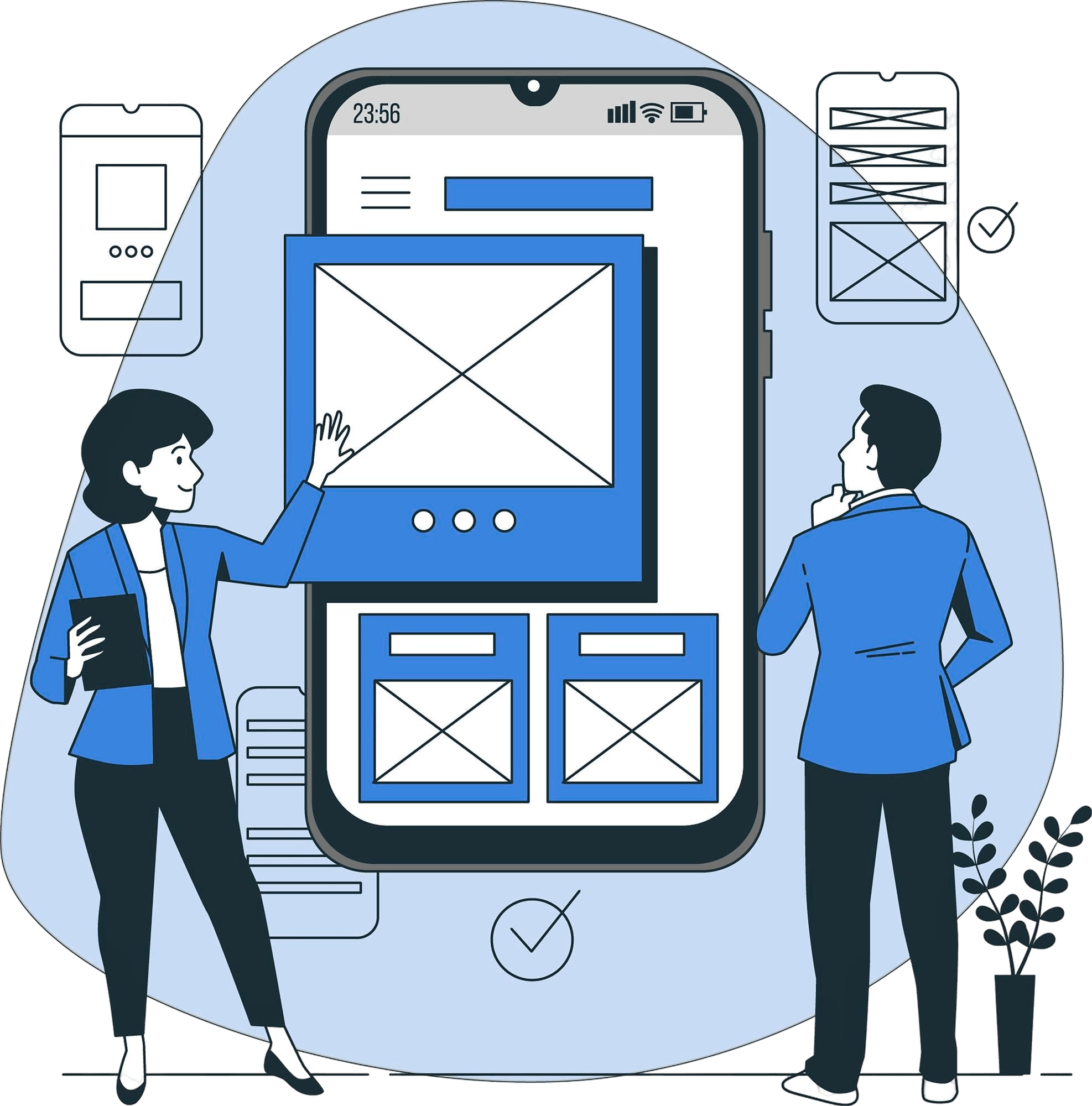
The most expensive place to discover that a user flow doesn’t work is after the development team has built it. Wireframing and prototyping exist to surface those problems earlier, when fixing them costs hours, not sprints. We build prototypes that are testable, stakeholder-ready, and close enough to the real product for feedback to mean something.
Trusted by Teams Across Industries


Why Wireframing and Prototyping Belong at the Start of Every Product Build
There is a version of product development in which design and development run in parallel, decisions are made on the fly, and the product takes its final shape through a series of revisions discovered during QA. Teams that work this way eventually ship products. What they also accumulate is significant rework, features rebuilt because the initial interpretation missed what users actually needed, interfaces redesigned because stakeholder feedback arrived after engineering was complete, and architectural decisions reversed because the product’s actual flow turned out to require something different from what was assumed.

Wireframing and prototyping in the USA exist to front-load discovery that would otherwise prevent this. A wireframe makes the product’s structure concrete enough to evaluate before anyone writes code. A prototype makes it interactive enough to test with real users, present to investors, and align across teams before the cost of change has climbed. The decisions that prototyping surfaces and resolves are exactly the decisions that are most expensive to discover later, which is what makes it one of the most cost-effective investments in any product development process.
At GreyScript, prototyping is not a standalone deliverable handed over before real work begins. It is the mechanism through which we validate product thinking before committing it to engineering, so what the development team builds is grounded in tested assumptions rather than untested ones.
What We Build and What It's For
Wireframing and prototyping span several fidelity levels, each suited to different decisions at different stages of the product process. We work across all of them.
Low-Fidelity Wireframes

Mid-Fidelity Wireframes

Interactive Prototypes

High-Fidelity Prototypes

User Flow Mapping
Usability Testing on Prototypes
Rapid Iteration & Concept Validation
Design-to-Development Handoff Documentation
Mobile App Prototyping
Mobile prototyping requires designing within constraints that don’t exist on other platforms: limited screen real estate, touch-based interaction patterns, navigation conventions that differ between iOS and Android, and the performance expectations of users who switch between applications constantly and have limited patience for interfaces that don’t feel immediate. A prototype that doesn’t account for these constraints produces feedback that applies to the prototype rather than to the mobile product.
We build mobile app prototypes in Figma with the platform conventions of the target operating system built into every interaction, iOS navigation models, Android gesture patterns, safe area handling, and touch target sizing that reflects how fingers actually behave on glass rather than how cursors behave on screens. Prototypes are shared in formats that can be previewed on real devices, because the difference between a mobile interface that feels right on a laptop screen and one that feels right in your hand is significant enough that device testing should happen before development, not after. For cross-platform products targeting both iOS and Android, we prototype the platform-specific variations side by side, making explicit the decisions about where the two diverge and where they share patterns before engineering begins, rather than discovering those decisions mid-development, when the cost of revisiting them is higher.
Web App Prototyping
Web application prototyping presents a different set of challenges than consumer-facing interfaces. Enterprise tools, SaaS platforms, and internal business applications typically involve high information density, complex workflow logic, and users who need to move through the product efficiently rather than be guided through it. The design problem isn’t simplification for its own sake; it’s making complex functionality navigable without creating cognitive load that slows experienced users down.
We build web app prototypes that test the specific challenges of complex web interfaces before development begins. Dashboard layouts are prototyped and tested for the information hierarchy decisions that determine whether data-heavy screens feel clear or overwhelming under real usage conditions. Multi-step workflows are prototyped end-to-end, including the error states, confirmation flows, and edge cases that are easy to overlook during early-stage design but that users encounter regularly in production. Navigation systems are validated through prototype testing before they’re committed to, because structural navigation decisions in web applications are among the most expensive to change once development has proceeded against them. For enterprise products where user adoption is a genuine concern, prototyping with representative users before development begins yields adoption-relevant feedback at the stage when it’s cheapest to act.
How a Prototyping Engagement Runs
The value of prototyping is in what it surfaces before development begins. Our process is structured to surface the right things at the right time.
Products We Designed and Prototyped Before Building

Finny Plus: High-Concurrency Fintech Ecosystem
- The Problem: Addressed critical visibility gaps caused by fragmented data silos and high-friction onboarding flows.
- The Engineering: Architected a unified, reactive data layer to support real-time synchronization and high-speed QR payments.
- The Complexity: Engineered a low-latency processing pipeline that transforms raw transaction logs into actionable visual intelligence.
- The Result: A scalable, enterprise-grade MVP deployed in 4 weeks, optimized for system resilience and user retention.

Bitsfi AI: Intelligence-Driven Web3 Trading Platform
- The Goal: Built a professional crypto ecosystem that uses AI to simplify complex trading and automate market analysis for global users.
- The Engineering: Architected a multi-exchange integration (Binance/Coinbase) and a secure DeFi bridge for seamless, real-time asset management.
- The Experience: Designed a high-fidelity interface using D3.js analytics, turning messy blockchain data into clear, interactive trading insights.
- The Business Result: A robust, military-grade secure platform that achieved a 92% onboarding rate and is fully prepared for national-scale growth.

Active Sync Plus: High-Fidelity Biometric Architecture
- The Challenge: Overcame "process-killing" by mobile operating systems to ensure 100% continuous data tracking during long-duration health sessions.
- The Engineering: Developed a Local-First SQLite buffering engine that prevents data loss during network drops and eliminates UI lag during high-frequency sensor updates.
- The Logic: Built a Dynamic Sampling Layer that balances high-resolution data capture with extreme battery efficiency for all-day wearable use.
- The Outcome: A robust, high-integrity health platform that provides professional-grade analytics for users who demand absolute data accuracy.

eMedicHub: Enterprise Healthcare Orchestration Platform
- The Goal: Built a secure, full-stack care delivery network that connects patients with specialists through real-time booking for video, voice, or in-person visits.
- The Security: Architected a HIPAA-compliant data vault with AES-256 encryption, ensuring all patient records and medical history are stored with institutional-grade safety.
- The Engineering: Developed a high-concurrency scheduling engine that manages complex doctor availability and multi-tier pricing across thousands of users.
- The Business Result: A robust, scalable healthcare infrastructure delivered in 12 weeks, designed for rapid market expansion and professional medical trust.

EatOnz: High-Throughput Food-Tech Infrastructure
- The Challenge: Engineered a solution for peak-load concurrency and complex data-filtering across thousands of high-attribute menu items.
- The Engineering: Architected a distributed PostgreSQL indexing strategy and atomic transaction logic to ensure zero-fail checkouts and sub-second search speeds.
- The Logic: Built a modular, scale-ready backend capable of onboarding thousands of vendors and handling high-volume traffic spikes without performance degradation.
- The Outcome: A high-performance commerce engine built for national scale, prioritizing system resilience, data integrity, and rapid market expansion.

DinnDuh: Real-Time Social Consensus Platform
- The Goal: Built a high-speed decision engine that eliminates group indecision by synchronizing restaurant preferences in real-time.
- The Engineering: Architected a reactive session-management system that handles simultaneous user voting and sub-second consensus notifications.
- The Logic: Integrated a geospatial data pipeline to deliver filtered, location-based restaurant recommendations instantly across multiple devices.
- The Business Result: A robust social utility infrastructure delivered in 12 weeks, optimized for elastic scaling and high-retention group engagement.
Frequently Asked Questions
What is the difference between a wireframe and a prototype?
At what stage of a product build should prototyping happen?
How realistic does a prototype need to be?
Realistic enough to support the decisions it’s being built to validate. A prototype used for internal stakeholder alignment is often lower fidelity than one tested with external users. A prototype used for investor presentations typically needs to be higher fidelity than one used to map out the navigation structure. We build prototypes at the fidelity level that serves the specific purpose, not uniformly high-fidelity because it looks more impressive, and not uniformly low-fidelity because it’s faster to produce.
Can prototyping be used to validate a product that's already in development?
Yes. Prototyping is most valuable before development begins, but it is also useful for validating new features on a product already in progress, testing proposed changes to existing flows, or capturing a design direction for a future version while the current one is still being built. We scope prototype engagements for all of these contexts.
How do you conduct usability testing on prototypes?
We test with representative users, people who match the profile of the product’s actual intended audience, observing how they navigate the prototype without guidance, where they succeed and where they hesitate, and what they misunderstand about how the product is supposed to work. Findings are documented and translated into specific design changes before the prototype is finalised. Testing is structured so that the findings reflect real usage behaviour, not responses shaped by the knowledge that the product is a work in progress.
What do we receive at the end of a wireframing and prototyping engagement?
Annotated wireframes and the interactive prototype itself, along with the interaction specifications and component state documentation that your development and visual design teams need to build from accurately. Where usability testing was conducted, a findings report documenting what was observed, what it means, and what design decisions were made in response. The deliverables are structured to convey the thinking behind the design, not just its output.
The Questions a Prototype Answers Are the Ones Development Can't Afford to Leave Open
If you’re building a product and want to resolve the critical design decisions before they become engineering problems, we’d like to understand what you’re working on.


